Innovation maturity
Current stage: MVP
- 01
Idea
Completed stage - 02
Research
Completed stage - 03
Prototype
Completed stage - 04
MVP
Current stage - 05
Production
Future stage - 06
Scale
Future stage
Executive Summary
The AI Agent Marketplace explores how enterprise teams could discover reusable agents with clear ownership and governance context.
AI Agent Marketplace is a centralized, web-based platform for discovering, launching, and governing an organization's fleet of AI/automation agents (e.g., CRM Agent, MinutesAI, Project Planner Agent etc) from a single, unified dashboard. The portal solves a common enterprise problem: as organizations adopt more internal AI agents, users lose track of what exists, where it lives, and whether it's working. The system is containerized via docker-compose.yml for one-command local deployment and is architected so new agents can be onboarded via configuration/API rather than code changes, with health monitoring, usage analytics, favorites, and audit logging built in as first-class citizens.
Problem Statement
AI experiments can become difficult to discover, evaluate, and reuse when capabilities remain isolated across teams.
- Fragmentation: each agent lived at its own URL/port with no common entry point, forcing users to memorize or bookmark disparate links.
- No discoverability: employees couldn't tell what agents existed, what they did, or whether they were currently operational.
- Hard-coded onboarding cost: adding a new agent typically meant redesigning UI/navigation rather than a simple registration step.
- No operational visibility: no way to know if an agent backend was up, degraded, or down before a user tried (and failed) to use it.
- No usage insight or governance: no audit trail of who launched what, and no groundwork for role-based access as the agent catalog grew.
Vision
Make approved agent capabilities discoverable without separating adoption from ownership, policy, and evaluation.
The vision is to build a "single pane of glass" for enterprise AI agents — decoupling the portal UI entirely from individual agent implementations so that:
- Agents remain independent Python/web services, integrated via pluggable launch mechanisms (URL redirect, API call, subprocess trigger, embedded iframe).
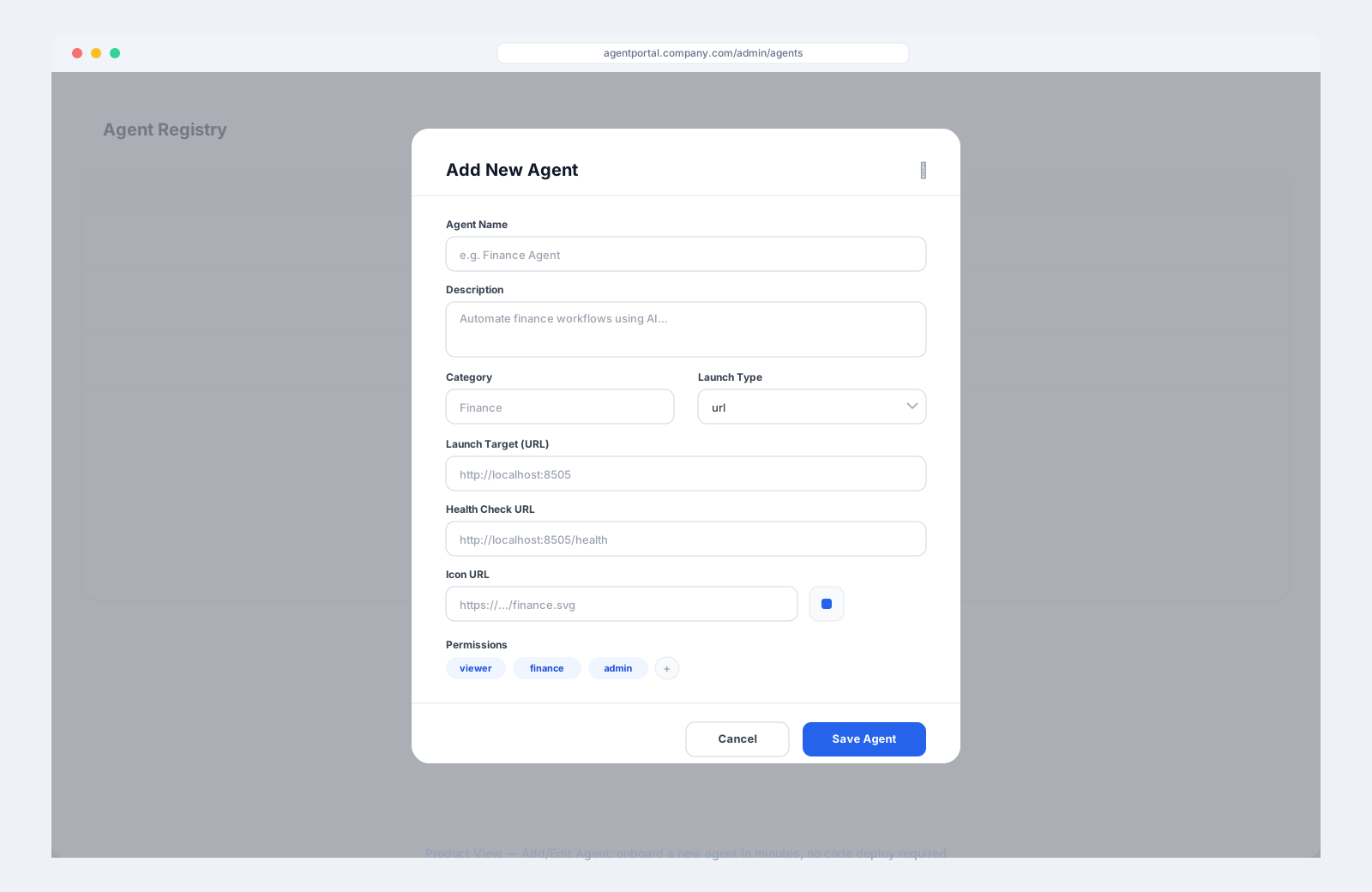
- The catalog is config/database-driven, not hardcoded — captured in the Agent data model (agent_id, name, launch_type, health_check_url, permissions, sort_order, etc.).
- The platform evolves toward a true "agent marketplace" experience — with discovery (search/filter), personalization (favorites/recents), operational trust (health badges), governance (RBAC, audit logs), and eventually orchestration/versioning.
Research
Research was translated directly into a structured, phased engineering plan, reflecting analysis of comparable internal developer/tool portals and enterprise app-launcher patterns. Key research-driven decisions:
- Config-first bootstrap, DB-second maturity: Phase 1 used a flat agents.yaml registry to validate the UX quickly, before investing in a database layer — a deliberate MVP-first sequencing (Phase 2 migrates YAML → PostgreSQL/SQLite via Alembic).
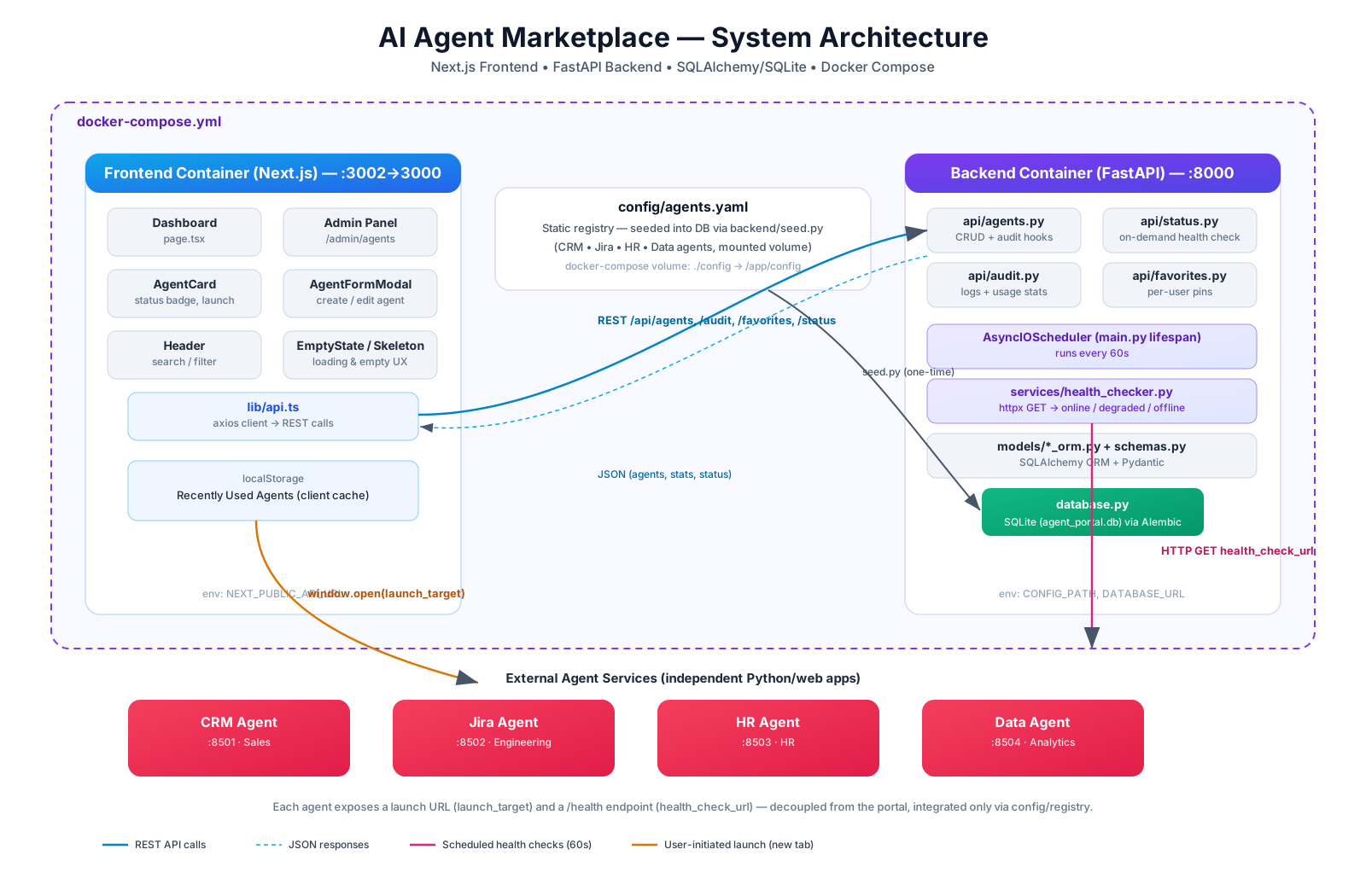
- Separation of concerns: Distinct api/, services/, models/, healthchecks/ layers in the backend mirror common FastAPI service architecture best practices for testability and modular growth.
- Health-check-first reliability model: Research into agent reliability failure modes led to an async, non-blocking scheduler (APScheduler) that periodically probes each agent's health_check_url rather than relying on user-reported failures.
- Audit-log-driven governance groundwork: Rather than bolting on RBAC first, the team recognized that auth/session handling differs per agent, so audit logging and usage stats were built early to support both compliance and future analytics without blocking on SSO integration.
- Extensible launch-type abstraction: Research into heterogeneous agent runtimes (some are simple URLs, others long-running Python processes) produced the launch_type enum (url, api, process, iframe) baked into the data model from day one , even though only url is implemented in the current prototype — deliberately future-proofing the schema.
Prototype
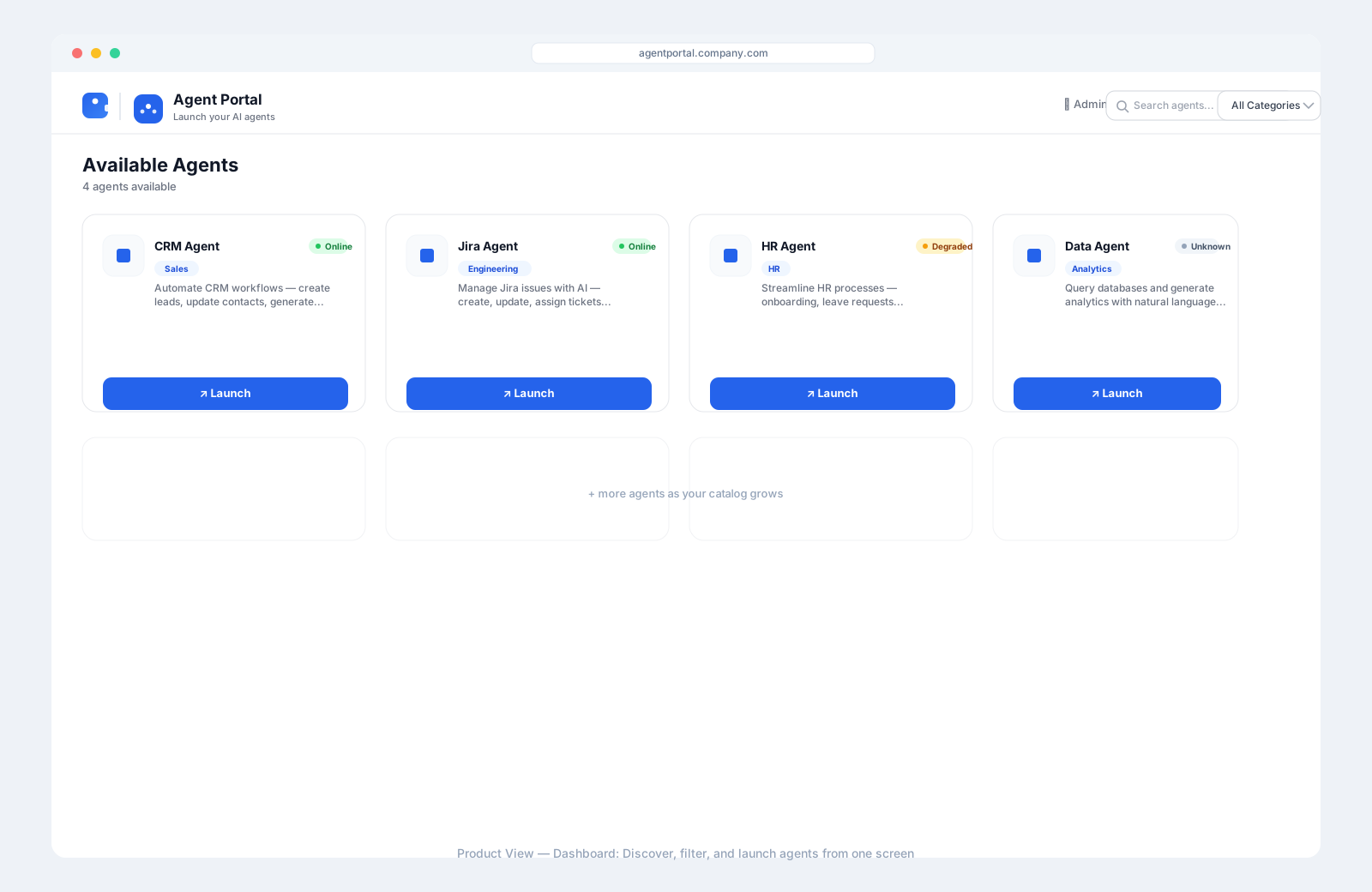
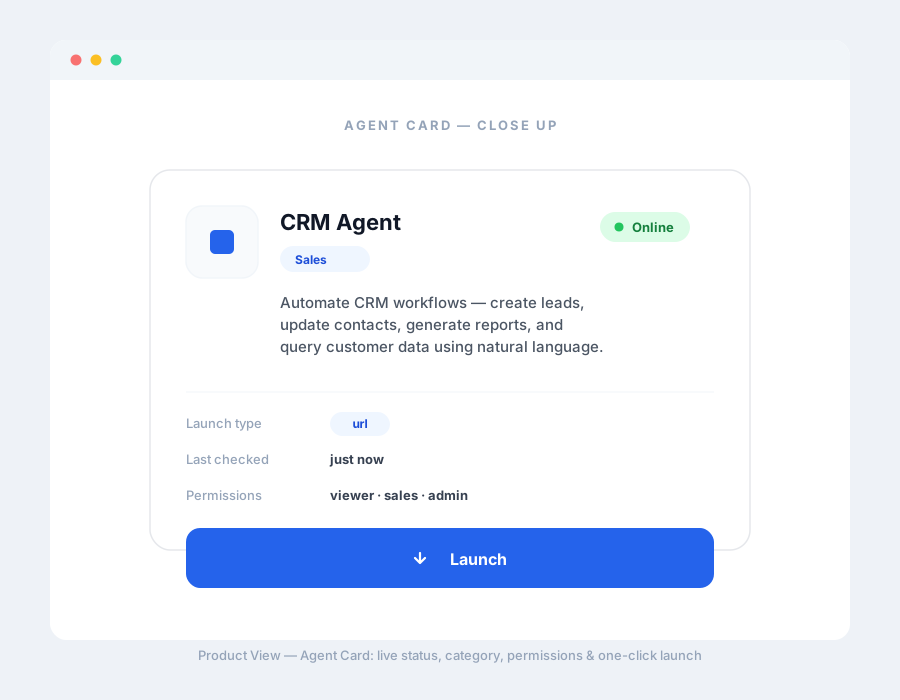
- Meet Priya, a sales operations lead who needs to update a lead in the CRM before her next call.She opens the AI Agent Marketplace homepage and is greeted by a clean grid of agent cards — CRM, Jira, HR, Data — each with an icon, a short description, and a colored status dot. She types "CRM" into the search bar; the grid instantly narrows to the CRM Agent card, its badge glowing green for "Online," confirming it's ready before she even clicks. She hits Launch, and the agent opens in a new tab in under three seconds — no bookmarks to dig through, no guessing whether the service is up.
- Later that week, Priya needs the Jira Agent to triage a backlog. She skips search entirely — it's already sitting in her Recently Used row from a previous session, one click away. When a teammate in Engineering complains the Jira Agent seems slow, Priya glances at the dashboard: the badge has flipped to amber (Degraded), confirming it's a known issue rather than something she broke — the portal caught it automatically, before anyone had to file a ticket.
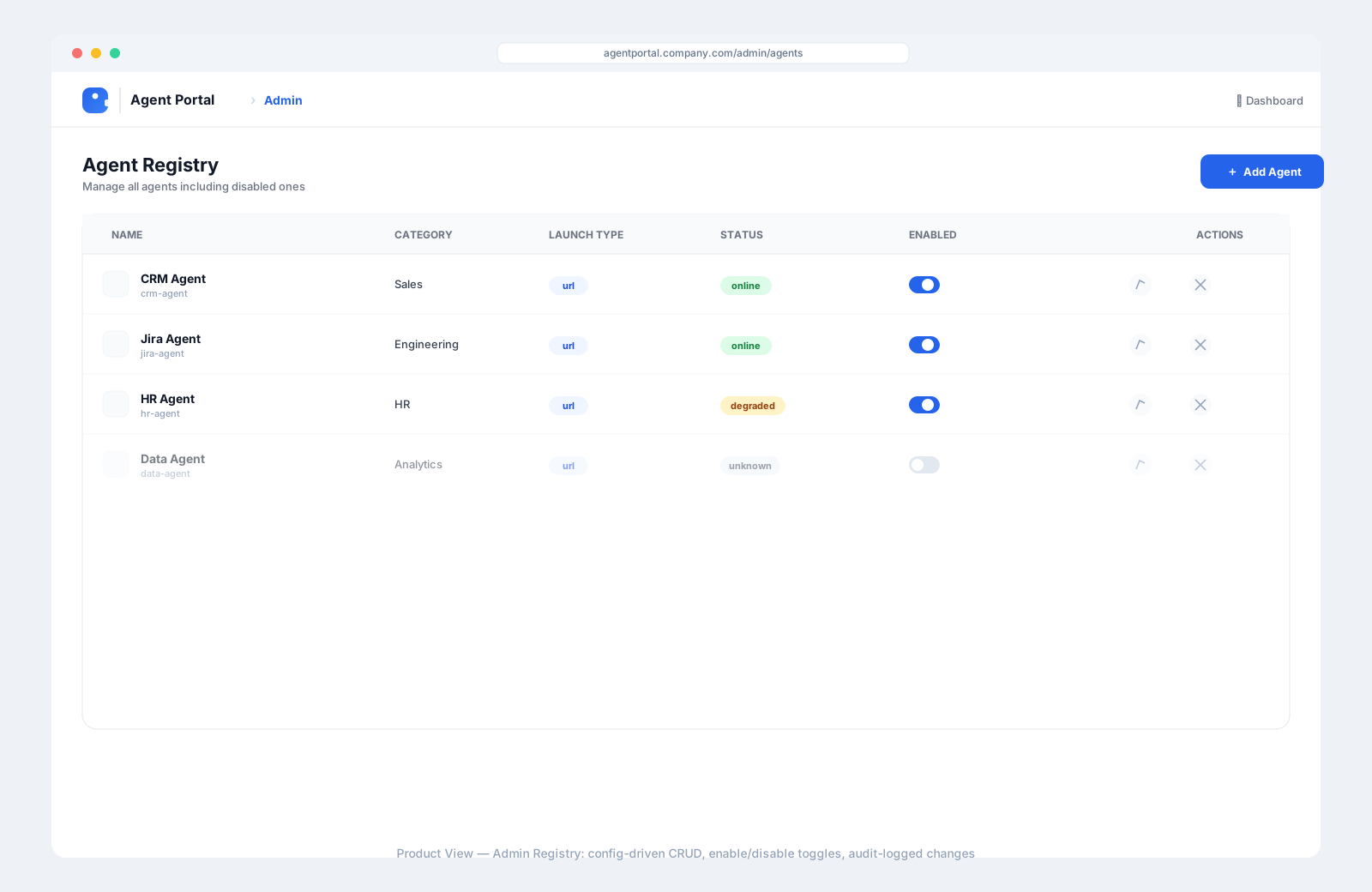
- Behind the scenes, the platform administrator has a different but equally simple experience. When the team stands up a new Data Agent, she doesn't file an engineering request or wait for a redeploy — she opens the Admin panel, fills in a short form (name, description, category, launch URL), and saves. Seconds later, the Data Agent card appears on every user's dashboard, searchable and launchable immediately. She can also see, at a glance, which agents get used the most and which quietly went idle — data she uses to decide what to invest in next.
- What Priya and the admin never see, but always benefit from: every launch and every admin change is quietly logged, every agent's health is re-checked every 60 seconds without anyone asking, and the underlying catalog is built so today's four agents can become forty without the experience changing at all.
Business Value
- Reduced onboarding friction: adding a new agent is a single POST /api/agents call or an admin-UI form submission — no frontend redeploy — directly hitting the PRD's "<30 minutes" onboarding target.
- Operational trust and reduced support load: live health badges and 60-second automated polling let users self-diagnose "is it down?" before filing a support ticket, and give platform teams real-time fleet visibility.
- Governance-ready audit trail: every launch and every admin mutation (with before/after state) is logged, giving compliance and security teams a foundation for change management and usage reviews without any extra engineering lift.
- Data-driven prioritization: the /api/agents/stats endpoint gives product owners objective usage data (total and 7-day launches) to prioritize which agents to invest in or deprecate.
- Scalable, low-maintenance architecture: the config/DB-driven registry, soft-delete pattern, and modular router/service structure mean the platform can grow from 4 to 100+ agents (per PRD scalability target) without architectural rework.
- Faster enterprise AI adoption: by giving employees one branded, searchable "marketplace" instead of scattered tools, it lowers the discovery barrier that typically slows internal AI adoption — directly supporting the "marketplace" positioning.
Lessons Learned
- Schema future-proofing paid off: designing the launch_type enum (url/api/process/iframe) and permissions list into the data model from Phase 1 meant Phase 4/5 features (RBAC, subprocess launches) can be added without a schema migration — validating the "design for extension, implement incrementally" approach.
- Sequencing YAML before DB reduced early risk: shipping a static agents.yaml registry first (Phase 1) let the team validate dashboard UX before committing to a database schema, avoiding premature over-engineering.
- Health checks needed graceful degradation: the _check_one helper explicitly distinguishes TimeoutException (→ degraded) from other errors (→ offline) — an early lesson that naive up/down checks produce misleading status for slow-but-alive agents.
- Audit logging is cheaper to build early than retrofit: embedding _audit() calls directly into every CRUD mutation from the start avoided the common pitfall of bolting on compliance logging after the fact.
- A phased roadmap prevented scope creep: explicitly deferring auth, async job orchestration, and analytics dashboards to later phases kept the initial prototype shippable and demoable while preserving a clear, dependency-ordered path to enterprise readiness.
Architecture
Governed agent discovery
Agent capabilities are registered with ownership and policy context before teams discover and adopt them.
Layer 01
Agent registry
Layer 02
Ownership and policy
Layer 03
Discovery experience
Layer 04
Adoption feedback
Roadmap
Learning before commitment.
- 01Completed
Opportunity framing
Define discovery, trust, and reuse as the core marketplace problems.
- 02Current
Governance research
Explore ownership, evaluation, access, and lifecycle requirements.
- 03Future
Prototype catalog
Prototype scope depends on approved use cases and governance constraints.
Gallery
Product views
Resources